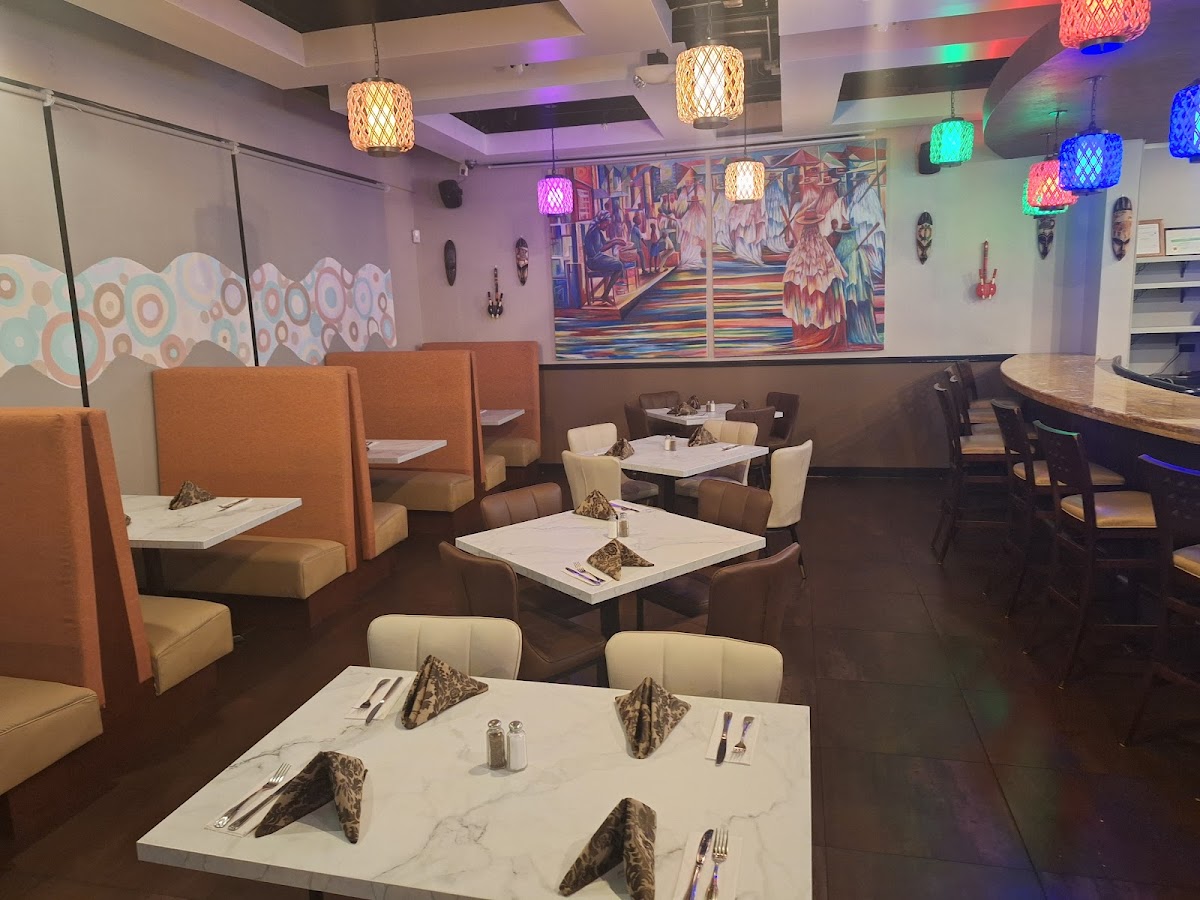
Food: First time trying Nigerian food and it was delicious. I was recommended this place by a client of mine. We had the moi moi, honey bean entree, and jollof rice entree. I loved the jollof rice with fish. Fish was fresh and light, not heavily battered. That was served with the best plantains I've ever had. As a certified potato lover™ I do not say this lightly: the plantains were better than potatoes. My partner had the honey beans with chicken and beef. He said he really liked it, but it was just on the spicier side. The moimoi was very good too. Service: Excellent, kind, and welcoming. Atmosphere: It's very nice inside, with thoughtful details in the napkins and the booth styling.
Overview
Walking into Bisi Restaurant - Nigerian Cuisine feels like stepping into a family kitchen where something good has been simmering all day. I’ve eaten Nigerian food across Chicago and the suburbs for years, and this spot stands out because it balances comfort with consistency. Located at 853 S Roselle Rd, Schaumburg, IL 60193, United States, it’s one of those places you hear about through word of mouth long before you see it trending online.
On my first visit, I watched the kitchen move with purpose. Orders weren’t rushed, and that patience shows up on the plate. Nigerian cuisine relies heavily on layered cooking methods-slow-simmered stews, carefully blended spice bases, and starches cooked to exact textures. Here, those processes are respected. The egusi soup, for example, isn’t watery or overly thick. The ground melon seeds emulsify naturally with palm oil, a method culinary historians trace back generations in West Africa. According to food science research published by the International Journal of Gastronomy and Food Science, this slow emulsification improves flavor absorption and mouthfeel, which explains why the soup tastes so rich without being heavy.
The menu covers staples that matter. Jollof rice comes out smoky and tomato-forward, not sweet, which is how it’s traditionally prepared in many Nigerian homes. I once compared it side by side with homemade jollof from a Nigerian friend, and the flavor profile here held its own. The rice grains stay separate, a sign the stock-to-rice ratio is done right. That may sound small, but anyone who cooks jollof knows it’s the difference between good and unforgettable. Dishes like pounded yam and fufu are smooth and elastic, made fresh rather than reheated, which you can tell from the texture alone.
One thing I appreciate is how the staff explains unfamiliar dishes without talking down to you. When I brought a coworker who’d never tried Nigerian food, they walked her through spice levels and pairings, suggesting efo riro with goat meat as a starting point. That guidance matters. Studies from the National Restaurant Association show diners are more likely to return when staff provide clear menu education, and it shows in the steady stream of repeat customers here.
Reviews often mention portion sizes, and they’re not exaggerating. Plates are generous, designed for sharing or leftovers, which matches traditional Nigerian dining culture. Protein options range from fried fish to slow-braised beef and goat, each cooked until tender but not falling apart. Palm oil is used thoughtfully, not excessively, aligning with recent nutritional findings from the World Health Organization that emphasize moderation rather than elimination of traditional fats.
The location is easy to reach, with plenty of parking, making it a practical choice for both quick lunches and relaxed dinners. I’ve noticed families dining alongside solo regulars, which says a lot about trust and consistency. Cleanliness is solid, service is steady, and wait times are reasonable even during busy hours.
If there’s a limitation, it’s that peak times can mean a short wait, especially on weekends. But that’s usually the case when a place builds its reputation on doing things properly instead of fast. As one regular told me while waiting for his order, authentic Nigerian food takes time, and that patience pays off every time a plate hits the table.
From the depth of the stews to the care taken with customer experience, this restaurant delivers food that reflects heritage rather than shortcuts. The combination of traditional cooking methods, thoughtful service, and consistently positive reviews makes it a reliable destination for anyone curious about Nigerian cuisine or craving flavors that feel genuinely rooted.
Good to know
Service options
✓ Kerbside pickup ✓ On-site services ✓ Takeaway ✓ Dine-in ✓ DeliveryHighlights
✓ Fast service ✓ Great beer selection ✓ Serves local specialtyPopular for
✓ Lunch ✓ Dinner ✓ Solo diningAccessibility
✓ Wheelchair-accessible car park ✓ Wheelchair-accessible entrance ✓ Wheelchair-accessible seating ✓ Wheelchair-accessible toilet ✓ Assistive hearing loopOfferings
✓ Alcohol ✓ Beer ✓ Cocktails ✓ Comfort food ✓ Healthy options ✓ Small plates ✓ Spirits ✓ Vegan options ✓ Vegetarian options ✓ WineDining options
✓ Lunch ✓ Dinner ✓ Catering ✓ Seating ✓ Table serviceAmenities
✓ Bar on site ✓ Toilet ✓ Wi-Fi ✓ Wi-FiAtmosphere
✓ Casual ✓ Cosy ✓ Romantic ✓ TrendyCrowd
✓ Family friendly ✓ Groups ✓ LGBTQ+ friendly ✓ Tourists ✓ Transgender safe space ✓ University studentsPlanning
✓ Accepts reservationsPayments
✓ Credit cards ✓ Debit cards ✓ NFC mobile payments ✓ Credit cardsChildren
✓ Good for kids ✓ High chairsParking
✓ Free of charge street parking ✓ Free parking lot ✓ ParkingPhotos
1 / 4
Location
Reviews
- No ratings yet 771 reviews
Tried this spot on a friend’s recommendation, and it was my first time having Nigerian food. The experience was excellent. Great food and a cozy ambiance. I started with the meat pie, which had a soft, warm crust and a flavorful filling. For the main course, I had Jollof rice with beef: the tomato-based rice was savory, the plantains were sweet and crispy, and the beef was seasoned perfectly. My server, Francis, was super kind and attentive. Highly recommend, and I’ll definitely be back!
My husband and I drove an hour and 15 minutes to experience this place and it did NOT disappoint! The food was delicious and the interaction with the workers was welcoming. The dining area is beautiful and cozy. We enjoyed EVERYTHING we had and definitely will return. We had the meat pie which was delicious and simple. I had the Egusi soup with goat meat which was full of flavor. It has a kick of spice which stays in the mouth and pairs extremely well with the fufu. My husband ordered the whole fish which came beautifully plated with plantains. Now that dish is extremely spicy for those of you who like heat. It is also quite flavorful and cooked to perfection. We shared the Jollof rice with beef and that was SO good. The beef was definitely a great choice with it and again we were hit with lots of flavor. I'm certainly sad that we have to travel to experience this goodness but it was worth it and we will return again!
It was $27 for fufu and egusi and me and my mom could only finish that one order shared! Huge portion sizes!! They give you sooo much food and it is delicious. Highly recommend this restaurant, our server was so kind we loved him ! we drove 45 minutes to come here and it is 100% worth the drive. We will be back !
Staff was very welcoming and friendly and made conversation so we got a great first impression of the place. the decor is beautiful and gives historical information on the portraits. the place in general is very aesthetically pleasing. The food was incredibly flavorful and enjoyed my meal. We ordered Egusi soup, jollof rice, and fried plantains. We tried the more popular dishes because it was our first time trying Nigerian food, but rest assured, we took the food home and will be feasting on the rest later :)
There are no words. The food was so good. Even when I entered the place I could tell the food would be good. The smell was like going to an eatery in Nigeria. The host was so friendly and warm. He gave us recommendations and explained everything very well. I told him that I had a shrimp allergy and he told me that all of the soups have crayfish powder. So, they make everything fresh even their crayfish powder. Fabulous. So the host explained that I can order efo riro the vegan style. They make their own broth, do not add meat or meat broth. I ordered that but they added goat and shaking on the side. Mmmmmmmm I am still dreaming of that efo today. It was so good. It had so much flavor. I had mine with amala. I was full but not bloated. The food tasted fresh. I Recommend this place 10 out of 10. Also we drove 40 minutes to try this place out. It did not disappoint.
An absolutely wonderful restaurant! We had the moi-moi, the porridge with goat, the goat peppers soup, and some joffol rice. It was all delicious and I would happily come back again. The porridge, joffol rice, and moi moi had a slight sweetness to it, a tanginess, and wonderfully umami from the meat. Highly recommend these! The goat peppers soup uses a lot of black pepper in it, beware because it's no joke! However if you like spiciness it's a great choice as it has pleasant sourness to it as well. It's a small menu, however you can't go wrong with anything you choose. It's dialed in on quality, not quantity. Each dish is made with high quality ingredients and you can taste it, nothing disappointed. If you like trying other culture's dishes this has to be at the top of the list! You won't find much like it around and it will transport you to a beautiful and delicious place! Just go!!!